
The House that Students Built…
Virginia Wesleyan students joined together to build an Alice in Wonderland storybook house from scratch for the summer 2010 exhibit at the Norfolk Botanical Garden.
Megan Z. Shearin | June 2, 2010
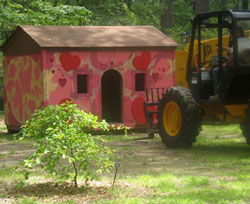 There will be nine playhouses in the magical world of the Enchanted Storybook Forest at the Norfolk Botanical Garden, and only one is built by students. The others were created by local builders and architects.
During the spring semester, members of Virginia Wesleyan’s Habitat for Humanity Chapter joined together to build a house from scratch based on the classic children’s story, Alice in Wonderland. This morning, the nearly-finished house was transported from the College to its permanent location at the Garden’s outdoor exhibit. The grand opening event is scheduled for Sunday, June 20, beginning at 12 p.m.
“Building the storybook house shows what Habitat for Humanity is really about,” said Maura Bradley ’11, student coordinator for the project and president of the Chapter. “This playhouse for children is a great symbol of the work, dedication and heart that go into Habitat houses.”
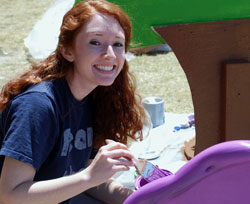 Since 1997, Virginia Wesleyan’s Habitat Chapter has built three houses for low-income families throughout the seven cites of South Hampton Roads. Diane Hotaling, director of community service, said the storybook house was a fun, hands-on project for the students.
“Students, with staff guidance, have framed, painted and roofed this house,” said Hotaling. “This is the only house in the exhibit built by students, which shows their volunteer spirit and the tremendous amount of support we’ve received from the campus.”
Tammy Dhority, technical director and set designer for the Hofheimer Theatre, is the lead designer of the Alice in Wonderland house. By incorporating pinks, yellows and purples, Dhority's vision of a fanciful, storybook feel has come to life. The inside of the house consists of a wallpapered wall with a fireplace, and a picture of Alice. A shingled roof completes the project.
The interactive playhouses will be free to visitors this summer with paid admission to the Garden. Special programs have been designed to enhance the horticultural and environmental literacy of visitors, and classes and activities will occur throughout the exhibit.