Environmental Science & Policy
Prepare for careers in environmental consulting, conservation, regulatory compliance, and environmental policy analysis.

Quicklinks
Joan P. Brock School of Mathematics & Natural Sciences
Department Chair: Dr. Chris Haley
Earth and Environmental Sciences studies how the planet works — geologically, chemically, and biologically — and how human activity interacts with those systems. The field combines hands-on fieldwork with laboratory science to understand and address real environmental problems.
Students choose between a B.A., a broad foundation suited to secondary education, business, law, or a double major, and a B.S., which adds upper-level EES coursework and stronger mathematics preparation for students planning graduate study. Both degrees build on foundational coursework in geology, oceanography or meteorology, and environmental chemistry, with electives spanning climatology, hydrology, GIS, and field-based research. Students seeking secondary certification in earth science should plan their coursework with advisors from both the EES and Education departments.
The Marine Science minor offers an interdisciplinary study of ocean environments — physical, chemical, and biological oceanography. It pairs well with a wide range of major programs.
*Requires approval from the department chair of either Biology or Earth and Environmental Sciences to ensure marine science-related content.
Earth and Environmental Sciences courses combine classroom instruction with hands-on fieldwork and laboratory analysis — many courses include dedicated lab time, and several involve field experiences ranging from local habitats to international destinations. Coursework spans geology, oceanography, meteorology, climatology, hydrology, and GIS, with specialized electives in scanning electron microscopy and energy systems.
Physical Geology with Laboratory
Investigates the materials and processes that characterize the interior of our dynamic and ever-changing planet. Topics include rocks and minerals, volcanism, earthquakes, the origin of mountains, the vastness of geologic time, and the unifying theory of plate tectonics. Intended for those seeking laboratory General Education credit and/or those interested in pursuing a major in EES. Offered every fall.
Environmental Geology with Laboratory
Investigates the interaction between people and the earth. Acquaints students with issues surrounding the origin, distribution, and exploitation of water, mineral, and energy resources. Natural hazards and their mitigation and issues surrounding Earth's climate are investigated. Intended for those seeking laboratory general education credit and/or those interested in pursuing a major in EES. Offered every spring.
Oceanography
Explores the geology of the ocean basins and the physical and chemical nature of seawater. Topics studied include ocean waves, tides, and currents. Links between the oceans and the atmosphere are explored with special emphasis on the effect of oceans on climate, El Nino, and climate change. Lecture three hours, laboratory three hours each week. Designed for science and non-science majors. Prerequisite or Corequisite: math placement level H, A, or B, or MATH 104. Course fee of $50 required. Offered every fall.
Meteorology
An introduction to the atmosphere and the science behind weather phenomena such as clouds, hurricanes, and tornadoes. Students practice weather forecasting, use meteorological instrumentation, and analyze global meteorological datasets. Designed for science and non-science majors. Prerequisite or Corequisite: math placement level H, A, or B, or MATH 104. Lecture three hours, laboratory three hours each week. Course fee of $50 required. Offered every spring.
Field Experiences in Earth and Environmental Sciences
Provides students with an intensive field experience in selected habitats as they conduct studies to examine various geological sites and sample particular habitats. May be repeated for credit as topics change. Lab fee. Prerequisite: consent. Offered intermittently.
Environmental Chemistry
An exploration of the Earth system and human perturbations to that system from a chemical perspective. Topics covered include ozone depletion, persistent organic pollutants, wastewater treatment, and toxicity of environmental contaminants. Laboratory exercises give students experience in environmental sampling and analysis. Prerequisites: CHEM 120. Lecture three hours, laboratory three hours each week. Identical to CHEM 270. Offered every fall.
Introduction to Geographic Information Systems
Introduces the computer-literate student to the underlying theory and practical applications of Graphic Information System (GIS) technology. Lectures are interwoven with hands-on computer exercises that illustrate the principles, develop technical competence, and demonstrate the versatility of GIS. Individualized projects reinforce concepts and help students acquire the knowledge and confidence required to use GIS outside the classroom. Prerequisites: math placement level H, A, or B, and junior/senior status, or MATH 104, or consent. Offered every fall.
Teaching Experience
Qualified students assist instructors in the teaching of EES courses and laboratories. May be repeated for credit, but students may apply no more than 4 semester hours toward graduation. Prerequisite: Consent. Offered every semester.
General Ecology
A study of the interrelationships between organisms and their environment. Topics will range from the individual level to the global scale, including both basic and applied ecological topics. Prerequisites: BIO 130, successful completion of ENG 105 with a grade of C or higher, and sophomore status or higher. Identical to BIO 316. Offered every spring.
Energy and the Environment
An introduction to the fundamental physical concepts underlying energy, its conversion, and its impact on the environment. Topics include fossil fuels, nuclear-fueled power plants, renewable forms of energy, pollution, and energy conversion. Prerequisite: math placement level H or A, or MATH 135 or MATH 170. Lecture three hours, laboratory three hours each week. Offered fall of even-numbered years.
Advanced Topics in Geology
An in-depth study of some aspect of geology. Topics may include structure and evolution of mountain belts, paleontology, earth materials, and sedimentology. May be taken multiple times for credit as topic varies. Prerequisite: EES 131 or consent. Course fee of $50 required. Offered every spring.
Climatology
An examination of the earth's climate system and the science of climate change. Topics include the dynamics and feedbacks of the climate system, ocean and biosphere influences on climate, reconstruction of past climate, predictions of future climate, and human influences on global and regional weather patterns. Prerequisites: ENG 105 with a grade of C or higher, and EES 200 or EES 210. Offered every spring.
Topics in Tropical Biology
An intensive field experience in neotropical ecosystems (rainforests, coral reefs, mangroves, caves, etc.). Descriptive studies of local flora and fauna will be combined with an in-depth investigation of a topic of interest. Field activities will include moderately strenuous exercise under a variety of weather conditions. Destinations may include Belize, Costa Rica, Trinidad, or other tropical sites. Course fee required. Identical to BIO 375. Prerequisite: BIO 130 and sophomore status or higher, and consent. Offered intermittently.
Scanning Electron Microscopy (SEM)
Introduces the essentials and broad research applications of SEM. Topics include the preparation of biological and non-biological specimens, the use of secondary and backscattered electrons for imaging, and the operation of SEM in high vacuum and variable pressure modes. Hands-on training and independent operation of the SEM are mandatory. Identical to BIO 393. Prerequisites: Sophomore status and consent. Offered intermittently.
Energy Dispersive Spectrometry
Explores the applications of Energy Dispersive X-ray Spectroscopy (EDS) in determining the chemical composition of specimens. Topics include sample preparation, specimen-beam interactions, and gun alignment procedures useful for generation and collection of x-rays in high vacuum and variable pressure. Hands-on training of the SEM and EDS system are emphasized. Prerequisites: BIO or EES 393 and consent. Offered intermittently.
Physical Hydrology
An introductory class covering the hydrologic cycle including groundwater, precipitation, surface water, the vadose zone, and coastal hydrology. Topics include flow to wells, runoff processes, floods, capillarity, unsaturated flow, saltwater intrusion and effect of sea level changes. Laboratory and field exercises will illustrate aspects of the hydrological cycle. Lecture three hours, laboratory three hours a week. Prerequisites: EES 133 and math placement H or A, or MATH 135 (C- or higher) or MATH 170 (C- or higher). Offered fall of odd-numbered years.
The Age of Oil
Explores all aspects of oil: its chemistry and origin; how we find it and turn it into myriad products; the influence that cheap, abundant oil has had on our society; and its role in politics and war. Environmental effects and the questions about the future supply will also be considered. Prerequisites: senior status or consent. Offered spring of odd-numbered years.
Biogeochemistry
Explores the connections among the atmosphere, hydrosphere, lithosphere, and biosphere through exploration of global cycling of nutrients and pollutants. Students investigate these biogeochemical cycles through analysis of primary research articles, field measurements, chemical analysis, and a self-designed research project. Prerequisites: senior status and any 200-level chemistry course. Lecture three hours, laboratory three hours each week. Identical to CHEM 450. Offered every spring.
Internship in the Natural Sciences
An intensive study of a specific field of science through an on-site field experience. Internships involve hands-on opportunities in the sciences that are relevant to the chosen site. Students may enroll for 2 or 4 semester hours in a given semester. A minimum of 80 hours devoted to the internship is expected for 2 semester hours, and a minimum of 160 hours is expected for 4 semester hours, but some placements may require more time. Students must coordinate their internship placement with the supervising faculty member at least two months prior to placement. Pass/fail grading. Prerequisites: junior/senior status and consent. Offered intermittently.
Research in the Natural Sciences
Offers students the opportunity to conduct original scientific research in an area of interest. Students work closely with one or more members of the natural science faculty to develop and conduct a research project, then present their findings orally during the semester's undergraduate research symposium and as a formal research paper. Students are encouraged to present their findings at a conference. Prerequisites: junior/senior status and consent. Students may enroll for 2 or 4 hours in a given semester. May be repeated for a maximum total of 8 semester hours. Identical to BIO 489, CHEM 489, CS 489, MATH 489, and PHYS 489. Offered intermittently.
William & Mary — VIMS
Virginia Institute of Marine Science
Preferred AdmissionOne reserved seat per year — including an annual scholarship — for a Batten Honors College graduate meeting admission criteria for the Master of Arts in Marine Science.
Duke University
Nicholas School of the Environment
Dual Degree 3+2The Cooperative College Program allows students to complete a Bachelor's degree at Batten and a Master of Environmental Management or Master of Forestry at Duke in five years.
Chatham University
Falk School of Sustainability and the Environment
Priority AdmissionPriority admission to the Master's in Food Studies, Master of Sustainability, or combined MSUS + MBA and MAFS + MBA programs.
Prepare for careers in environmental consulting, conservation, regulatory compliance, and environmental policy analysis.
Coursework in physical and environmental geology supports careers in geology, natural resource management, and earth science research.
The B.A. track prepares students for secondary earth science teaching, with additional coursework available for Virginia certification in consultation with the Education Department.
The B.S. track's additional math and upper-level coursework prepares students for graduate study in earth science, environmental science, and related research fields.

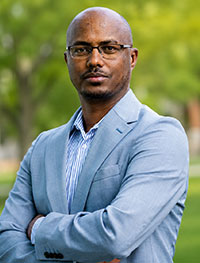
Assistant Professor of Earth and Environmental Sciences

Professor of Earth Science
Chair of Earth and Environmental Sciences

Batten Professor of Ocean and Atmospheric Sciences
Director of Sustainability

Batten Assistant Professor of Earth and Environmental Sciences

Professor of Biology and Environmental Science
Director of Academic Effectiveness and Accreditation ,Chair of Computer Science and Cybersecurity
Coordinator of Sustainability Management

